.png)


.png)
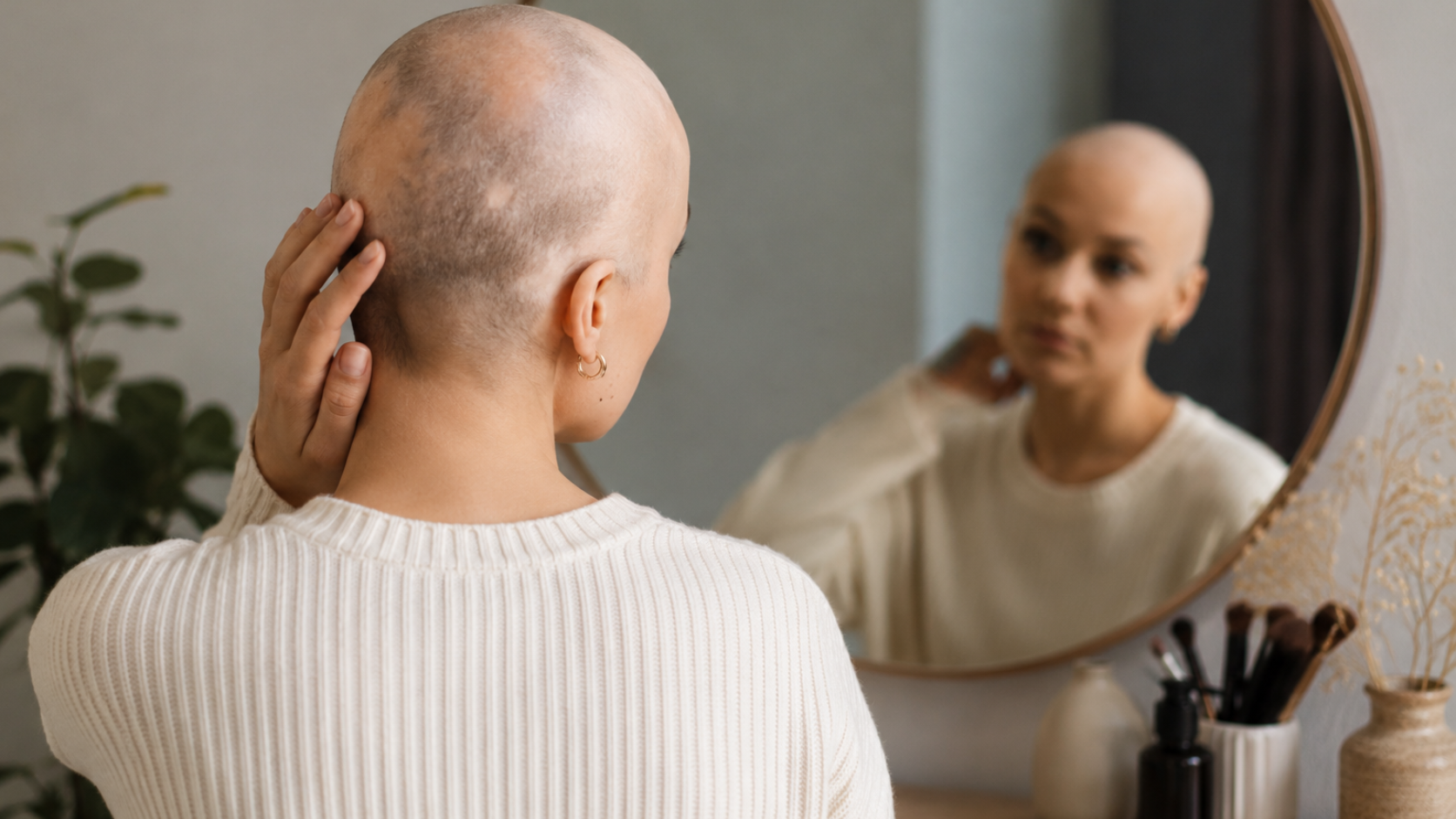
If you've noticed a round patch where hair used to be, or your part line looking wider than it used to, you're probably searching for answers right now. I want to give you some real ones, and also be upfront that I'm not a doctor. What I can offer is what I've learned over ten years of working with women and kids going through this.
Alopecia areata is an autoimmune condition. That means your immune system, which is supposed to protect you, mistakenly attacks your hair follicles instead. It's not something you did. It's not stress alone, though stress can be a trigger for some people. It's not poor hair care.
The hair loss usually shows up as small, round or oval patches, most often on the scalp, but it can affect eyebrows, eyelashes, or other areas too. It can happen at any age, though it most commonly starts in the teens, twenties, or thirties.
Here's the part that matters most to me: the hair follicle itself is usually still alive underneath. That means regrowth is possible, and for a lot of people it does happen, sometimes on its own, sometimes with treatment from a dermatologist. But "possible" isn't the same as "predictable," and living in that in-between space, not knowing what your hair will do next, is exhausting in a way that's hard to explain to someone who hasn't been through it.
You don't have to wait for a diagnosis before you get support. You don't have to keep wearing a hat and hoping no one asks. You don't have to figure this out on your own.
I'm not here to treat the underlying condition, that's what a dermatologist is for, and if you haven't seen one yet, I'd genuinely encourage you to. What I can do is give you something that looks and feels like your own hair while you and your doctor figure out the rest, or for as long as you need it. Custom wigs and toppers, fitted specifically to you, not pulled off a rack.
If you're navigating this and don't know where to start, come sit down with me. The first conversation is free, and there's no pressure to book anything after it.